Kitchen Coffee Station Ideas: Counter, Pantry, Island, Built-In
Updated Sep 22, 2026 · 9 min read
Short answer
Give the coffee station 24-30 in (61-76 cm) of counter at the end of a run, next to an outlet and at least 2 ft from the stove. Standard upper cabinets leave 18 in of height, so measure your machine with the lid open before you commit to the spot.
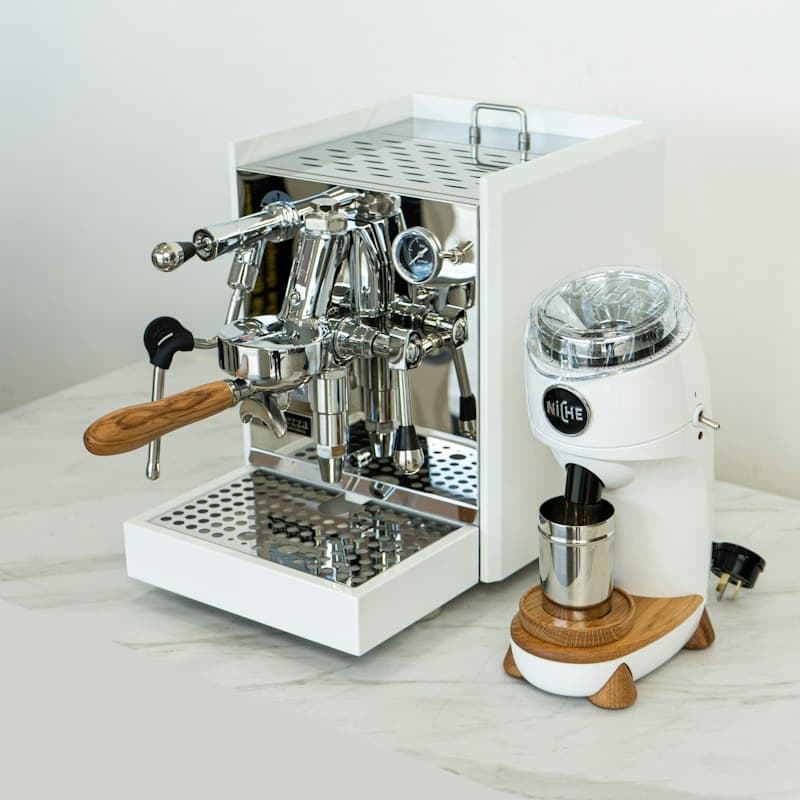
Kitchen coffee stations fail when they compete with cooking. The station can't live where you chop vegetables, and it can't block the path between stove and sink. The job is to find space the kitchen isn't already using, and nearly every kitchen has some.
This page covers the five places that work, what fits where, the countertop under it all, and what a built-in bar with a sink involves. If your kitchen is very tight, start with the small coffee bar ideas instead.
Where a coffee station fits in a kitchen
| Spot | Space you need | Cost to set up | Best for |
|---|---|---|---|
| End of a counter run | 24-30 in wide x 24 in deep | $15-$50 for a tray and mat | Most kitchens |
| Appliance garage | 18-24 in wide, 15 in or more of clear height | Nothing if you have one | Hiding the machine |
| Pantry shelf | 24 in wide shelf at 36 in high, plus power | $50-$150 plus any electrical work | Keeping the kitchen clear |
| Back side of an island | 24 in of island top plus an outlet | Electrician if there's no outlet | Open-plan kitchens |
| Dedicated base cabinet with pull-out | 18-24 in wide cabinet | $40-$100 for slides and a shelf | Pod and small drip machines |
| Built-in bar with sink | 36-48 in of cabinetry | $900-$4,000 and up for plumbing alone | Renovations, second rooms |
The countertop station
This is the most common setup and it works when you zone it. Pick one section of counter, 24-30 in (61-76 cm) wide, and make it coffee only. The end of a run is ideal because it's usually dead space, and nobody needs to reach past it.
Rules for the spot:
- Near an outlet. Kitchen counter outlets are on 15 or 20 amp circuits, which is 1,800 or 2,400 watts. A kettle (1,200-1,500 W) and an espresso machine (1,000-1,600 W) heating at the same moment can trip a 15 amp breaker. If that happens, plug them into outlets on different circuits or don't run them together.
- At least 2 ft (60 cm) from the stove. Airborne grease settles on everything near a cooktop, and a greasy grinder is miserable to clean.
- Not right beside the sink either. Splash and grinders don't mix. A foot or two of separation is enough.
Mark the zone with a tray or a mat under the machine. Without a visible edge, coffee gear drifts into the cooking gear and the whole counter looks messy. Both are covered in the accessories guide.
What stays on the counter: the machine, the grinder if you use one, and one canister. Filters, syrups, backup beans, and descaler go in the cabinet directly above or below. More than four things on the counter and it stops looking like a station.
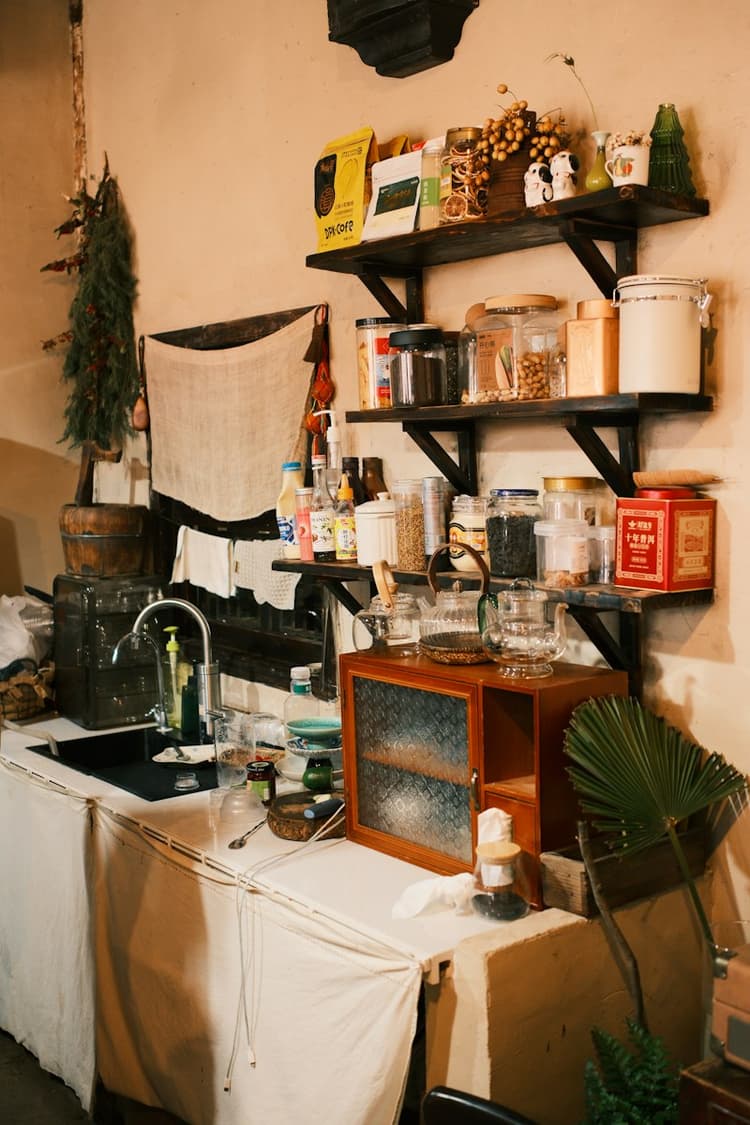
What fits under upper cabinets
Standard upper cabinets hang 18 in (46 cm) above a 36 in (91 cm) counter. That gap decides which machines work in a kitchen.
| Machine | Typical height | Under 18 in cabinets |
|---|---|---|
| Pod machine | 8-13 in | Fits. Some lift a lever or lid another 3-5 in. |
| Drip coffee maker | 12-15 in | Fits, but top-fill lids need the machine pulled forward. |
| Espresso machine | 12-17 in | Tight. Tank and cup tray are usually on top. |
| Grinder with hopper | 10-16 in | Usually fits. Refill by pulling it forward. |
| Electric kettle | 8-10 in | Fits. Don't boil it directly under the cabinet. |
Steam is the hidden problem. A kettle or drip machine venting straight up into the underside of a cabinet will eventually lift the finish or swell the particleboard. Pull the machine toward the front edge of the counter while it brews.
If you're tired of sliding the machine in and out, a tray with felt pads or a purpose-made sliding appliance tray fixes it for a few dollars.
Appliance garages
An appliance garage is a counter-level cabinet with a roll-up, flip-up, or pocket door. They were designed to hide mixers and blenders. A coffee machine is a better use, since you use it daily and it looks untidy.
The measurement that matters is clear height inside. A garage sitting under the uppers has at most 18 in, and a roll-up door housing takes a few inches of that. Measure your machine with the lid open. You want to fill the tank without dragging the machine out every time.
Most garages have an outlet inside, so the machine stays plugged in. Brew with the door open and leave it open a few minutes afterward so steam clears. Then close it and the kitchen shows no coffee setup at all.
Pantry coffee stations
A walk-in or deep closet pantry is one of the best spots in the house. The shelving exists, the mess is hidden, and the counters stay clear.
Add a shelf at counter height, 36 in, if there isn't one. A piece of butcher block or plywood on heavy brackets screwed into studs does the job. Make it at least 16 in deep so the machine's feet sit fully on it.
Power is the catch. Most pantries have no outlet. Adding one is a routine job for an electrician and typically runs a few hundred dollars. An extension cord is a poor permanent answer for an appliance that pulls over 1,000 W.
The payoff: machine, grinder, beans, filters, syrups, and mugs all in one place, none of it visible from the kitchen. Walk in, brew, walk out with a cup.
Island and peninsula setups
An island with seating on one side has a natural coffee spot at the far end of the working side. The machine faces the cook, the stools face the machine, and whoever is sitting gets served across the counter.
Islands often have outlets on the side panel rather than the top, which means a cord running over the edge. It works, but keep it on the side away from foot traffic and away from children's reach. A pop-up outlet set into the countertop is cleaner and needs an electrician.
Bar-height islands (40-42 in) are less comfortable for tamping espresso than standard 36 in counters. For drip or pod machines it makes no difference.
Cabinet and open-shelf stations
Dedicate one base cabinet to coffee. A pull-out shelf on full-extension slides lets you bring the machine out to brew and push it back after. Common drawer slides are rated 75-100 lb, plenty for a pod or drip machine. Always brew with the shelf pulled out so steam doesn't collect inside.
For a more visible version, take the doors off one upper cabinet above the machine. Paint the inside a darker color than the rest of the kitchen, such as deep green, navy, or matte black, and put your best mugs and canisters there. You get the framed look of a coffee bar hutch from cabinets you already own.
If the kitchen has no spare cabinet, a freestanding piece against a free wall does the same job. See the coffee bar cabinets guide and the rest of the furniture section.
Kitchen countertops and coffee
Coffee is a dye and it's mildly acidic. On most kitchen counters that doesn't matter. On a few it matters a lot.
| Surface | Coffee stains | Heat | Water | Verdict |
|---|---|---|---|---|
| Quartz | Resists, non-porous | Good, use a trivet for a hot kettle | Excellent | Best all-round |
| Granite | Resists if sealed | Excellent | Excellent if sealed | Reseal about once a year |
| Laminate | Resists | Poor, hot kettles can scorch or bubble it | Good, except at seams | Fine with a mat |
| Butcher block | Stains if unsealed | Fair | Poor if water pools | Seal it and wipe spills right away |
| Marble | Stains and etches within hours | Good | Fair | Avoid under a coffee machine |
| Tile | Tile resists, grout stains | Excellent | Good | Use dark or epoxy grout |
Stone installed runs roughly $50-$100 or more per square foot, so protecting it is far cheaper than any repair. Three cheap ways:
- A silicone mat under the machine, $12-$25. Catches drips and buffers heat. The single most useful protective accessory.
- A tray under everything. If it stains, you replace a $15 tray and not the counter.
- A large cutting board laid flat. Free if you own one, removable, and it looks deliberate.
Material choices for a freestanding bar, along with surface sizing, are in the full setup guide.
Built-in coffee bars and adding a sink
A built-in coffee bar is a run of base cabinets, usually 36-48 in wide, with a counter, uppers or open shelves above, and its own outlets. People add them in a kitchen alcove, a butler's pantry, a dining room wall, or a basement. The cabinetry is ordinary kitchen work. The sink is where cost and complexity jump.
When a sink is worth it
If the coffee bar is in the kitchen, the main sink is three steps away and a second one is almost never worth the money.
It does make sense when the bar is in a basement, den, home office, or outdoor space, where rinsing a portafilter means a walk through several rooms. It also makes sense if you're already renovating. With walls open, adding supply and drain lines costs much less than doing it later.
Skip it if you rent, or if the plumbing would cost more than the rest of the coffee bar put together. A pitcher of water and a drip mat handle most of what a bar sink would.
What adding a sink involves
A sink needs a water supply line, a drain line with proper venting, and an outlet nearby if you want an instant hot water unit. New lines mean opening walls or floors to reach existing plumbing. The closer the bar is to a bathroom, a laundry, or an old wet bar, the cheaper it gets.
| Scenario | Typical cost |
|---|---|
| Plumbing within about 6 ft of existing supply and drain | $800-$1,500 labor plus $100-$300 for sink and faucet |
| New lines through walls or floors | $2,000-$4,000 or more, often including drywall repair |
| Converting an existing wet bar | $200-$800, mostly cosmetic |
| Self-contained portable sink, 2-5 gallon tanks | $150-$300 |
| Plumbing permit, where required | about $100-$200 |
The sink itself can be small. A bar sink about 15 in wide or less, roughly $50-$150, is enough. You're rinsing a milk pitcher and filling a kettle, not washing pans.
Wet bar conversions are the cheap route. Many houses from the 1980s and 1990s have one. The supply and drain are already there, so the work is a new faucet, maybe a new sink, fresh cabinet fronts, and an outlet or two.
Portable sinks with a clean tank and a waste tank need no plumbing. They hold 2-5 gallons, need emptying and refilling, and look temporary. Reasonable for a garage or outdoor coffee bar.
A water line without a drain is worth asking your plumber about if what you really want is a plumbed-in espresso machine or a filtered tap. A small supply line, like the one feeding a fridge ice maker, is a far smaller job than a full sink.
Permits
Most municipalities require a permit for new plumbing. That means an inspection, so the work has to meet code: venting, pipe sizing, backflow prevention. Skipping the permit saves a little now and can cause trouble when you sell, since unpermitted work generally has to be disclosed. Use a licensed plumber.
If you're also planning an under-counter fridge, plan both at once so the electrical work and wall openings are shared. See coffee bar with mini fridge.
The two mistakes to avoid
Too close to the stove. Oil, steam, and splatter end up on the machine and the mugs. Keep 2 ft between the coffee zone and the cooking zone.
Off the morning route. The station should sit on the path from the bedroom to wherever you eat breakfast, not on the far side of the kitchen. You want to pass through it, not detour to it. If two people use the kitchen at 7 a.m., it should also be somewhere one person can make coffee without standing in front of the fridge.
For more layouts by room and style, browse the coffee bar ideas gallery.
Questions people ask
- Where should a coffee station go in a kitchen?
- At the end of a counter run, near an outlet, at least 2 ft from the stove and out of the path between stove and sink. Ideally it sits on your morning route from the bedroom to wherever you eat breakfast.
- How much counter space does a kitchen coffee station need?
- 24-30 in wide for a machine, a grinder, and a canister. A single pod machine or drip maker on a tray gets by with 12-18 in. Standard counters are 24-25 in deep, which is enough for any home machine.
- Will my coffee maker fit under the kitchen cabinets?
- Upper cabinets normally sit 18 in above the counter. Most drip machines are 12-15 in tall and fit, but top-fill models need to slide forward to open the lid. Many espresso machines are 14-17 in tall and need top access for the water tank and cup warmer, so check carefully.
- Is a sink in a coffee bar worth it?
- Not in a kitchen, where the main sink is a few steps away. It makes sense in a basement, den, or outdoor bar, or during a renovation when the walls are already open. Expect $900-$1,800 if plumbing is within about 6 ft and $2,000-$4,000 or more if it isn't.
- What countertop is best for a coffee station?
- Quartz, sealed granite, and laminate all handle coffee well. Avoid real marble, which stains from coffee within hours. Whatever you have, a silicone mat under the machine protects it for about $12-$25.
- Can you put a coffee station in a pantry?
- Yes, if you add a shelf at counter height (36 in) and get power to it. Pull the machine toward the front or leave the door open while brewing so steam doesn't collect around food and shelving.