Coffee Canisters: How to Keep Your Beans Fresh
Updated Sep 22, 2026 · 5 min read
Short answer
Buy an airtight, opaque canister sized to one bag of coffee, which is about 1 to 1.5 quarts for a 12 oz bag. Whole beans taste best 1 to 3 weeks after roasting, and no canister keeps them good past about 4 weeks.
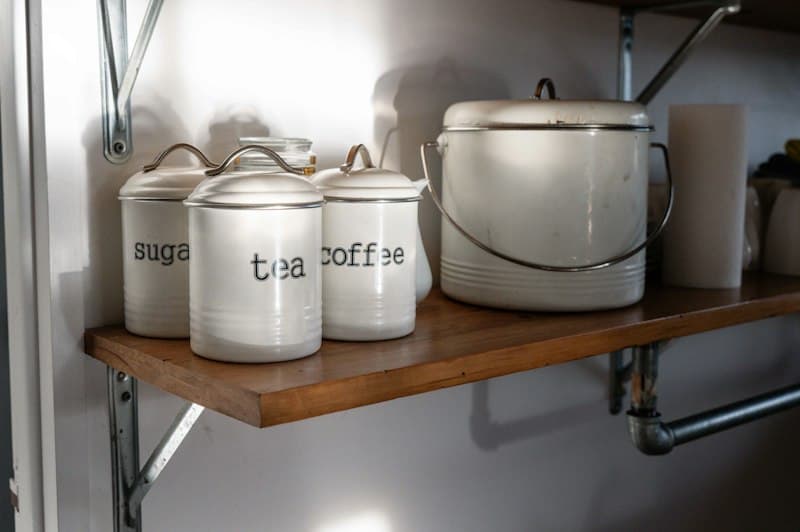
Coffee goes stale, and it starts within days of roasting. A canister will not make old coffee fresh again. It slows the decline, which is worth $20 if you buy decent beans. Here is what matters, what is marketing, and how to pick one.
Why coffee goes stale
Four things work on beans after roasting.
Oxygen. The biggest one. It reacts with the oils and aromatic compounds that make coffee taste like anything. The smell when you open a fresh bag is those aromatics leaving.
Moisture. Beans absorb water from humid air, which speeds up the breakdown. Ordinary kitchen humidity is enough to matter over a few weeks.
Light. UV breaks down the organic compounds in coffee. A clear jar on a sunny counter looks nice and harms the beans.
Degassing. Fresh beans release CO2 for several days after roasting. That is normal, and it is why specialty bags have a one-way valve. Once it slows, you want as little air around the beans as possible.
What makes a good coffee canister
An airtight seal
This is the one feature you cannot skip. Look for a silicone gasket in the lid. Test it: close the empty canister and pull the lid. Resistance means the seal works. If the lid lifts straight off, the canister is decorative.
Opaque walls
Stainless steel and ceramic block light completely. Tinted glass is a compromise if you want to see the beans. Clear glass is the worst for storage, despite being the most common on display.
A one-way CO2 valve
A one-way valve lets CO2 out without letting air in, the same as the valve on a specialty coffee bag. It is useful if you buy beans within a few days of their roast date, since you can seal them right away without pressure building. Supermarket coffee is weeks old and has finished degassing, so the valve does little there.
The right size
The best canister is only just big enough for what you drink in 1 to 2 weeks. A half-empty canister is half full of air.
| Coffee you buy | Canister capacity | Notes |
|---|---|---|
| 8 oz (227 g) bag | About 0.75-1 qt (0.7-1 L) | Good for one-cup-a-day drinkers |
| 12 oz (340 g) bag | About 1-1.5 qt (1-1.4 L) | The standard specialty bag. About 20 cups |
| 1 lb (454 g) | About 1.5-2 qt (1.4-1.9 L) | |
| 2 lb (907 g) | About 3-4 qt (2.8-3.8 L) | Only if you really buy this much at once |
Dark roasts are less dense than light roasts and take more room for the same weight. If in doubt, size up slightly. Most 12 oz canisters are about 4 to 5 inches wide and 6 to 8 inches tall, which fits under a standard 18 inch upper cabinet and on most coffee bar shelves.
Stainless steel, ceramic, glass or plastic
| Material | Price | Blocks light | Pros | Cons |
|---|---|---|---|---|
| Stainless steel | $15-$40 | Yes | No odor absorption, durable, easy to clean | Cannot see bean level. Cheap ones have weak gaskets |
| Ceramic | $20-$50 | Yes | Many styles, suits farmhouse and traditional kitchens | Heavy, breakable. Many lids just rest on top with no gasket |
| Glass | $10-$25 | No, unless tinted | See the beans. Clamp lids with a rubber gasket seal well | Must live in a cabinet, or be amber or dark glass |
| Plastic (BPA-free) | $8-$15 | Varies | Cheap, light | Absorbs coffee oils, so old flavors linger |
Stainless steel is the best all-round choice. With ceramic, check for a real gasket before buying. Glass is fine if it goes in a cabinet. Plastic is a stopgap.
Vacuum canisters vs standard airtight
Some canisters push air out before sealing, with either a plunger-style inner lid or a pump built into the lid. Less oxygen stays in contact with the beans than with a plain airtight lid.
They do work. Beans in a vacuum canister hold up a few days longer. Whether that is worth the extra money depends on how fast you drink.
| How long a bag lasts you | What to buy |
|---|---|
| About 1 week | Standard airtight canister, $15-$25 |
| 2 weeks | Either. A valve helps if the beans are fresh from a roaster |
| 3-4 weeks | Vacuum or plunger-lid canister, $30-$50, or buy smaller bags |
Where to keep the canister
On the counter is fine if the canister is opaque and sits away from the stove, the oven, the top of the fridge, and direct sun. Most people keep it on the coffee bar next to the grinder, which is where it belongs in a sensible station layout.
In a cabinet is slightly better: dark and temperature-stable. If your canister is glass, this is where it goes.
Not in the fridge or freezer for daily beans. Every time you open a cold container in a warm kitchen, condensation forms on the beans. The exception is bulk buying. Freeze portions in sealed airtight bags, not in the canister, then thaw one bag at a time and move it to the canister. Never refreeze.
How much coffee to buy at a time
Buying less, more often, does more than any canister. A 12 oz bag makes about 20 cups, so at two cups a day it lasts around 10 days, which is right in the good window. If a bag takes you a month, switch to 8 oz bags. Most specialty roasters sell them.
Ground coffee is a different story. It starts losing aroma within minutes, and a canister only slows that a little. If you can, buy whole beans and grind per brew. The home barista setup guide covers which grinder to get.
Canisters for everything else on the coffee bar
Sugar, tea bags and cocoa are less fussy than coffee. They need a lid that keeps moisture out, and that is about it. Clear glass is fine for sugar. A matching set of three looks tidy on a shelf, but only the coffee one needs a real gasket. For what else to keep on hand, see the guide to stocking your coffee bar. The coffee bar accessories guide covers mats, trays, scales and the rest.
Questions people ask
- Should you store coffee in the fridge or freezer?
- Not for beans you use daily. Opening a cold container in a warm kitchen puts condensation on the beans, and moisture speeds up staling. For long-term storage you can freeze portions in sealed airtight bags and thaw one bag at a time. Do not refreeze.
- How long do coffee beans stay fresh?
- Whole beans are at their best 1 to 3 weeks after roasting. After about 4 weeks they taste noticeably flat, even in a good canister. Ground coffee starts losing aroma within minutes of grinding, so grind right before brewing.
- Is glass or stainless steel better for a coffee canister?
- Stainless steel, because it blocks light completely. Light breaks down the compounds that give coffee its flavor. If you like the look of glass, keep the jar inside a dark cabinet.
- Do you need a canister with a CO2 valve?
- It helps with beans bought within a few days of roasting, because they still release CO2 and the valve lets it out without letting air in. Grocery store beans have already finished degassing, so the valve makes no difference.
- How much coffee should you buy at a time?
- A 12 oz bag every 1 to 2 weeks suits most people. If you go through coffee slowly, buy 8 oz bags or split a bag with someone.
- What size canister holds a 12 oz bag of coffee?
- Roughly 1 to 1.5 quarts, or 1 to 1.4 liters. Dark roasts are bulkier than light roasts, so go toward the larger end if that is what you drink.